
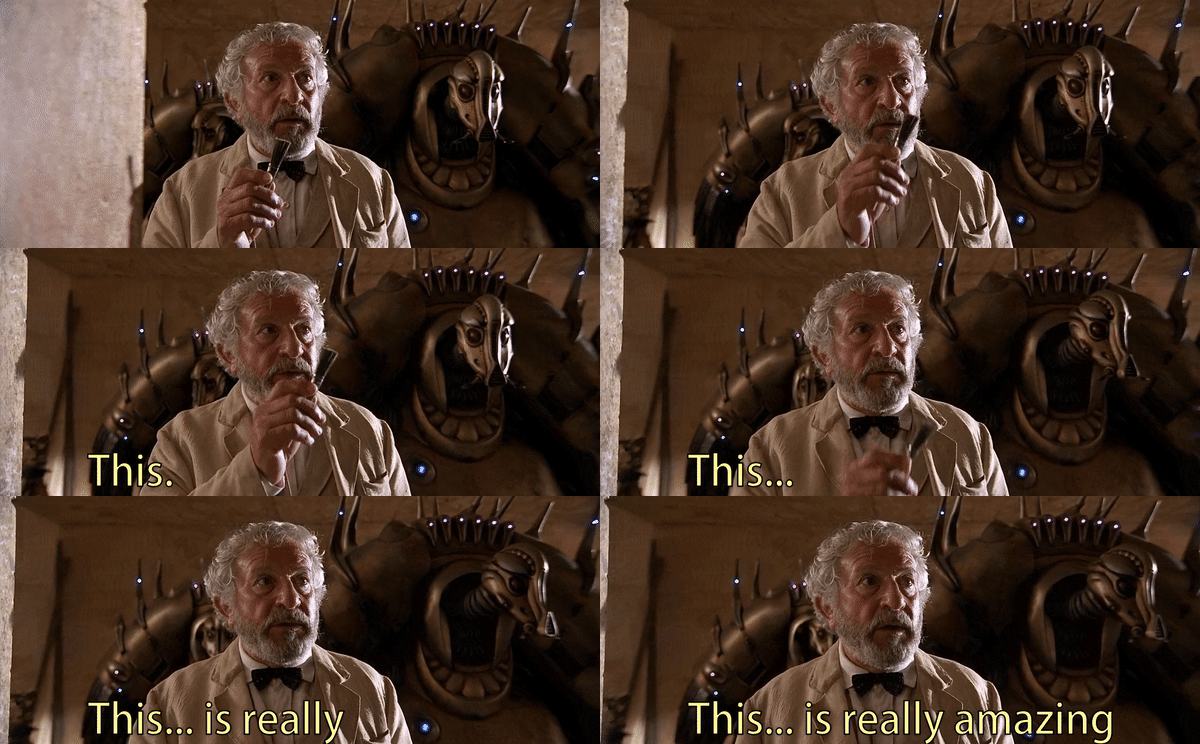
How in the how in the how?? I realise that you are reading this expecting me to have the answers ready for you, well as a matter of fact, I do not, and frankly I love not knowing a thing. Acknowledging my ignorance while it is fresh allows us to have a nice shared thought — in the words of The Fifth Element’s Professor Pacoli — “This is really amazing”
My belief in technology is that we are 40 years behind knowing what it truly is, as in consumers will never know how far behind we actually are in terms of technological achievement. I adopted that belief from a rather remarkable TEDtalk that for the life of me I have never been able to find again. The world made sense suddenly, but I digress.
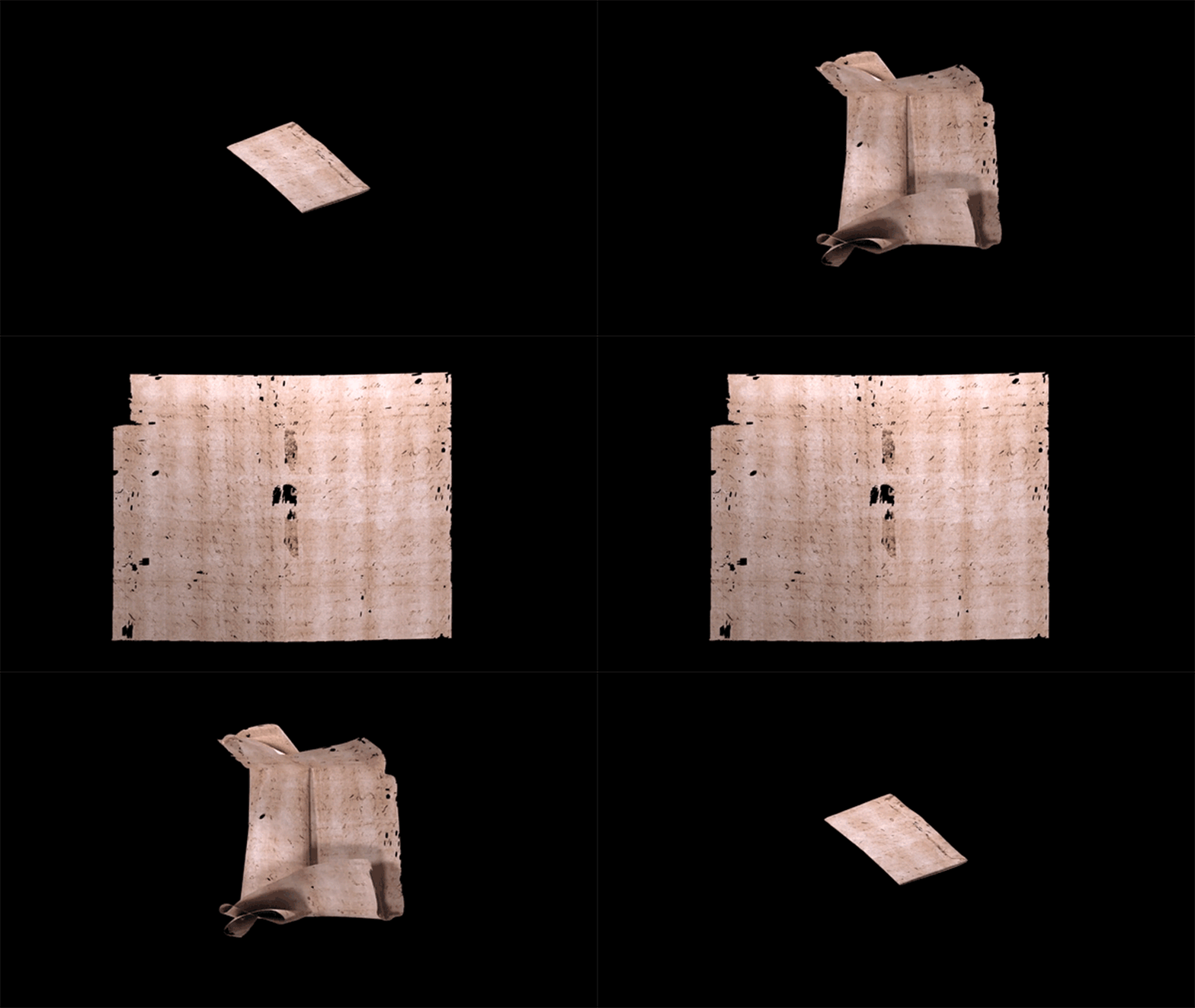
Making use of x-ray microtomography, cross-sections of a preserved letter, sealed since 1697, were generated to recreate it as a 3D model. ‘Reconstructing and virtually unfolding the volumetric scans of a locked letter with complex internal folding, produced legible images of the letter’s contents and crease pattern while preserving the original artifact.’[1] Amanda McGowan writing for The World (March 05, 2021) explains it better:
Ever since humans have been sending messages, they’ve devised ways to keep them secure from prying eyes. But before there was password protection or message encryption — before there were even “envelopes,” which were not mass produced until the 1800s — there was something known as “letterlocking.”
Using high-tech scans and a specially designed computer algorithm, [Jana] Dambrogio (conservator at the research library at MIT) and a multidisciplinary team of researchers, a group called Unlocking History, were able to “virtually unfold” a letter written in the 1600s — without opening it.
For Amanda McGowan’s succinct article, visit https://www.pri.org/stories/2021-03-05/researchers-virtually-unlock-sealed-17th-century-letter
What makes this story equally fascinating is learning the history of the 300-year-old folding process and how intricately letters were once closed. Here is a demonstration video of letterlocking, researched, directed, and demonstrated by Jana Dambrogio:
Produced by MIT Video Production / Modelled after the Harry Ransom Center, Medieval and Early Modern Manuscript Collection, Letters of British Royalty, HRC 57.
Historians previously had to slice open texts or break their seals in order to conduct research. This new digital method means that not only will better results and greater discoveries be made of our world and the people who once inhabited it, but artifacts from bygone civilizations can be better preserved for years to come, if not centuries more. A great thing to see in the near future would be an online library of digitized findings, free to the world.
[1]Dambrogio, J., Ghassaei, A., Smith, D.S. et al. Unlocking history through automated virtual unfolding of sealed documents imaged by X-ray microtomography. Nat Commun 12, 1184 (2021). https://doi.org/10.1038/s41467-021-21326-w
For the comprehensive breakdown of the research and technology used, visit Nature Communications (02 March 2021):
nature.com/articles/s41467-021-21326-w
If the human race had the foresight to anticipate technology, then those privileged men and women who found such relics of mystery in the past may have demonstrated a level of patience bordering on virtuous if it ever truly was in the name of science and not recognition (…and there I go ranting again), which should only go to prove how revolutionary this new and exciting x-ray microtomography method is (while also proving my point that we don’t know diddly about how advanced we truly have it yet. Just look at NFT). Forward thinking ingenuity would take a massive leap ahead if only that golden glimpse of what was possible around the corner was shared, or at the very least, not buried under a constant stream of samey news (memo to self; read sciences more).
Congratulations, Unlocking History! Writing is truly something special that I believe we should all adore.
 lit-b.com