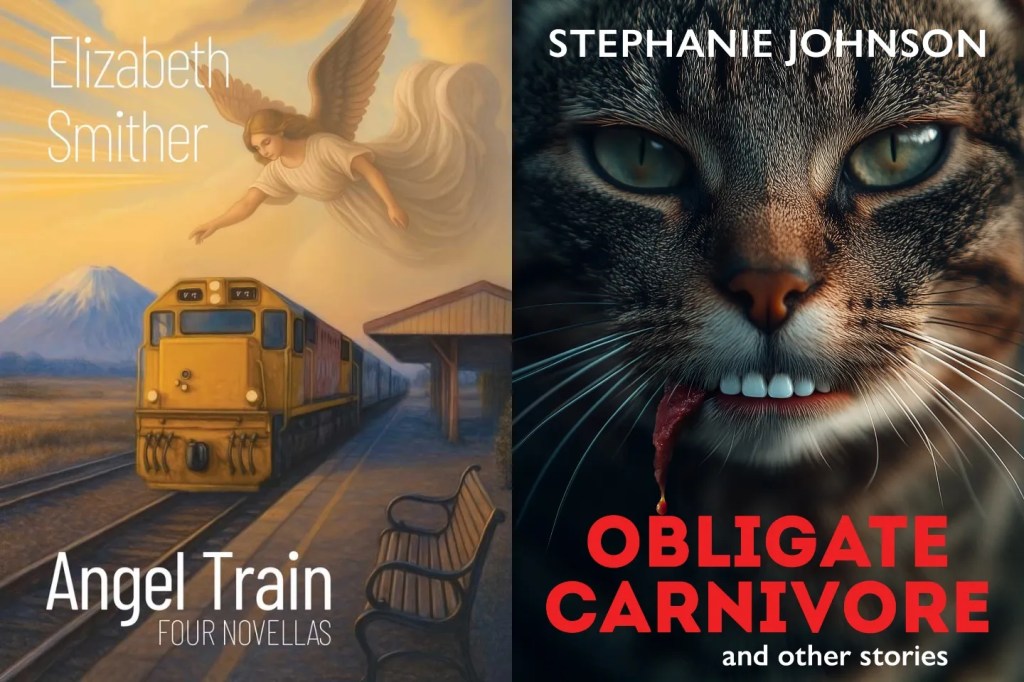
Non-metaphorically judging books by their covers: Two books by distinguished New Zealand authors were ejected from the Ockham Book Awards because their covers were generated by AI.
— text by columnist and literary editor Steve Braunias
The Ockham New Zealand Book Awards are the country’s premier literary honours for books written by New Zealanders. First established in 1968 . . .(😤 promised myself, I wouldn’t vent . . . 😤 just wanted to summarise story and drop a link . . . 😤 but, I can’t . . . 😤 not 🤬)
There are people in the world who absolutely love creating visual art —— love it! The absence of that passion and desire to create, amounts to imagery that is nothing more than procedurally generated pareidolia; the image and its creation is lazy, the laziness is obvious, the deceptiveness smacks of greed, and the implication that an author/s/publisher/s believe it is okay and/or should be commercially normalised is felt by an entire creative community, who collectively know that anything created by anyone skilled would have been better than AI slop. Which absolutely begs the question; did the authors use AI to pseudo-write their stories? If graphic presentation isn’t being valued, then why should readers believe the written-word was considered with any more reverence?
See: Diminishing returns on AI writing use-cases can and should weed-out authors/publishers who deserve to be called-out, to weigh-in on their “creative” practices (likely cost-cutting/greed/self-delusion). Granted, there is nothing wrong with experimentation, but don’t be upset if consumers don’t want what is being sold. “Common sense is not so common” said Voltaire. So right.
“[…] the jettisoning of my book from the competition is deeply unsettling. It’s not as if I held any hope for it being even longlisted, but I appreciated the idea of it sitting alongside its peers on the judges’ desks. The reason for its disqualification is ironic, given my distrust and dislike of AI in the creative sphere. I have never used it in my writing process and never will.”
[Stephanie Johnson] detailed the discussions she had with Quentin Wilson about the cover image of a cat with human teeth: “When I first saw it I was delighted. I assumed it was a photograph and that the teeth had been photo-shopped in.”
She continued, “After Quentin rang me to tell me the book had been disqualified I wrote immediately to Belinda Cooke, manager of the awards, and she replied politely and firmly, holding to the position that any use of AI at all in the production of a book excludes it.” [Steve Braunias for newsroom.co.nz 17/11/2025]
Arduous way to learn a lesson about award disclaimers. Whether complicit in or indifferent to the visual presentation of your unpublished writing, showing a little more/above average involvement/passion in the publication process, is what garners favour among nominations. Awards are given to thoughts, processes of expression, not clickety-clicks.
(Why can LITB see this issue being spun into a 26-million dollar referendum by some future political leader?) (screenshot this)
Oscar Wilde said, “Imitation is the sincerest form of flattery that mediocrity can pay to greatness.” Greatness; if that isn’t the truth we want from our expressions of creativity, from ourselves, then who knows what the point of sharing it with the world is? AI generation is two steps removed from imitation; think about that.
Anyhoo, LITB has in general never been a fan of awards.
 lit-b.com